How to Release Shoulder Tension That Keeps Coming Back
- Andreas kuck

- May 16
- 6 min read
You usually notice shoulder tension after it has already built up. It shows up when you reach for a jacket, turn your head while biking, sit down to work, or try to fall asleep and realize your upper body is still bracing. If you are searching for how to release shoulder tension, the most helpful place to start is not with force. It is with understanding why your shoulders keep tightening in the first place.
For many people, shoulder tension is not caused by one dramatic injury. It comes from repetition, posture, stress, training load, shallow breathing, and long hours at a desk or on a phone. Sometimes the muscles around the neck and shoulders are overworking because the upper back is stiff. Sometimes the chest is tight, the jaw is clenched, or the nervous system simply has not shifted out of a guarded state. That is why quick stretching can help, but it does not always last.
Why shoulder tension builds up so easily
The shoulders are designed for movement, not for holding still under low-grade stress all day. When you spend hours typing, driving, carrying a bag on one side, or hunching slightly forward, certain muscles start doing more than their fair share. The upper trapezius, levator scapulae, chest, and front of the shoulders often become dominant, while the mid-back and lower shoulder stabilizers become less active.
Stress adds another layer. When you are mentally overloaded, your body often responds by lifting the shoulders, tightening the jaw, and shortening the breath. That pattern can continue even when you are no longer aware of it. This is why shoulder tension often feels both physical and emotional. It is not imaginary. It is a real body response.
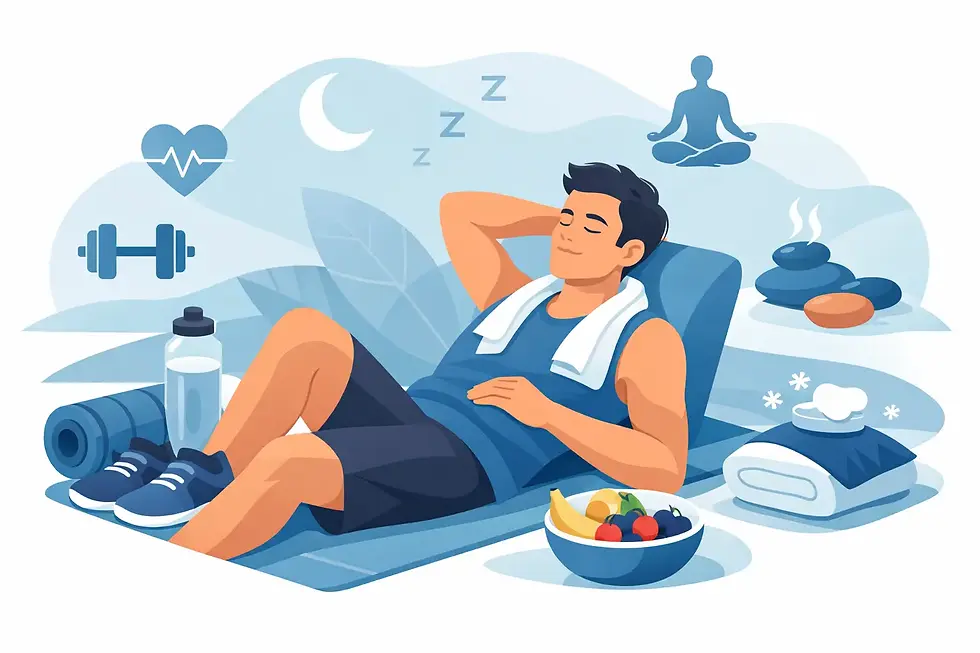
There is also a recovery issue. If you train hard, sleep poorly, or move very little between workouts, the tissues may not fully reset. In that case, the shoulder area starts to feel dense, tired, or restricted rather than sharply painful. That difference matters. General tension often improves with movement, heat, bodywork, and breathing. Strong pain, numbness, weakness, or symptoms that travel down the arm deserve a more careful assessment.
How to release shoulder tension at home
The goal is not to aggressively pull on tight muscles. The goal is to help the area feel safe enough to let go while restoring better movement around the shoulder blades, neck, chest, and ribs.
Start with your breath. Sit or lie down comfortably and place one hand on your lower ribs. Breathe in through your nose and feel the ribs widen slightly. Exhale slowly and let the shoulders drop without forcing them down. Stay here for one to two minutes. This may sound simple, but if your breathing has become shallow and upper-chest dominant, this is often the first reset your body needs.
Then add gentle movement. Roll the shoulders up, back, and down a few times, then reverse the direction. Follow that with slow neck turns from side to side. Keep the range small and smooth. If you feel yourself straining, back off. Tension usually responds better to patient repetition than to intensity.
A doorway chest stretch can also help. Place your forearm lightly against a door frame and step through just enough to feel the front of the chest open. You should not feel pinching in the shoulder joint. Hold for a few breaths, then switch sides. If the front body is tight from desk work or phone use, opening the chest often reduces the load on the upper shoulders.
For the upper back, try a supported twist or a gentle thread-the-needle variation on the floor. These movements can improve rotation through the thoracic spine, which takes pressure off the neck and shoulders. If twisting does not feel good, even lying on the floor with a rolled towel under the upper back for a minute can create space.
Heat is useful when the shoulders feel hard, dull, and overworked. A warm shower or heating pad can soften the area before stretching or self-massage. If the shoulder is irritated after exercise, a cool pack may feel better. It depends on whether the tissue feels stiff and guarded or inflamed and reactive.
Self-massage can help, but technique matters
Many people go straight into digging hard with their fingers or a massage ball. Sometimes that works for a moment, but it can also make the area tense up again. Start lighter than you think you need.
Use your opposite hand to gently knead the top of the shoulder and the muscle between the neck and shoulder. Slow circles are often more effective than pressing straight down. A massage ball against the wall can work well around the shoulder blade, but avoid direct pressure on the bones, the front of the neck, or any spot that creates tingling.
Spend more time on the edges of the tension, not only the most painful point. The body often releases better when surrounding areas soften first. Thirty to sixty seconds in one spot is usually enough before moving on.
If you notice that self-massage always gives short relief but the tension quickly returns, that is usually a sign the pattern needs a broader approach. The muscle may not be the only issue. Breathing mechanics, desk setup, training habits, and stress load may all be contributing.
Movement habits that make a real difference
If your shoulders tighten every day, what you do between treatments matters as much as what you do during them. The biggest shift often comes from reducing how long you stay in one position.
Set a simple rule: every 30 to 60 minutes, change shape. Stand up. Walk briefly. Reach your arms overhead. Interlace your hands behind your back if that feels comfortable. Rotate your torso. A short movement break is more realistic, and often more effective, than waiting until the end of the day to do one long stretch session.
Strength matters too. Tight shoulders are not always weak shoulders, but poor balance around the upper body can create chronic overuse. Gentle strengthening for the upper back, rear shoulders, and shoulder blade stabilizers can help the neck and upper traps stop compensating. This is especially useful for people who work at a laptop, cycle regularly, or do a lot of pushing exercises without enough pulling work.
Sleep position can also play a role. If you sleep on one side with the arm folded under you, the shoulder may stay compressed for hours. A pillow that supports the neck and another pillow to rest the top arm on can reduce strain. Small changes here can make a surprising difference.
When massage and yoga support are the better option
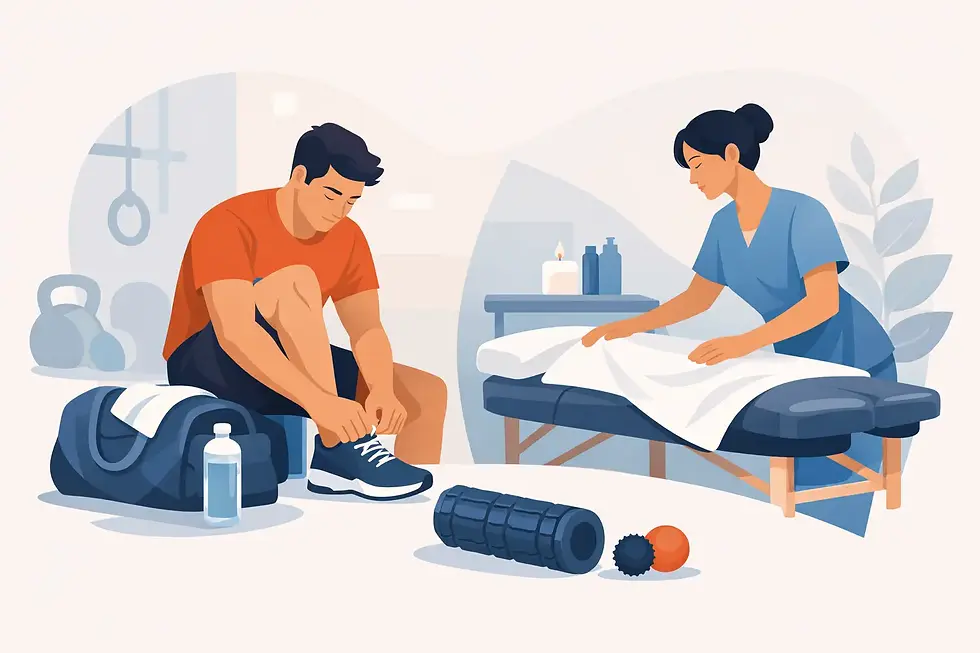
Sometimes home care is enough. Sometimes it is not. If the tension has been building for weeks, keeps returning despite stretching, or is affecting sleep, focus, workouts, or headaches, hands-on treatment can help interrupt the pattern more effectively.
Massage is useful because it does more than work on one sore spot. A good session looks at the shoulders in context. The neck, chest, upper back, scalp, jaw, and even the breath can all influence how the shoulders feel. Deep pressure is not always necessary. In some cases, slower, more precise work creates better release than intensity.
Private yoga support can also be valuable when you know movement helps, but you are not sure what type of movement your body actually needs. Some people need mobility. Others need stability, breathing work, or a calmer pace so the nervous system stops bracing. Personalized guidance matters because shoulder tension does not present the same way in every body.
At A.K. Yoga & Massage, this kind of issue is approached individually rather than as a standard relaxation treatment. That matters if your shoulder tension is tied to posture, training, stress, or recurring neck tightness and you want relief that feels both restorative and functional.
How to tell if your shoulder tension needs more attention
General tension should gradually improve with movement, warmth, rest, and treatment. If it does not, pay attention. Sharp pain, loss of range of motion, nighttime pain that wakes you repeatedly, numbness, weakness, or pain shooting down the arm are signs to stop guessing and get appropriate support.
It is also worth looking more closely if your headaches keep starting from the neck and shoulders, or if one shoulder always feels significantly more restricted than the other. Sometimes what feels like simple tension is mixed with joint irritation, nerve involvement, or a repetitive strain pattern that needs a different plan.
A simple weekly approach that lasts
If you want lasting relief, think in layers. Daily breathing and movement resets keep tension from accumulating. Gentle stretching and self-massage help when the area starts tightening. Strength and mobility work improve how the shoulders handle daily load. Massage or one-to-one yoga support helps when the pattern is stubborn, complicated, or clearly stress-related.
The real answer to how to release shoulder tension is usually not one magic stretch. It is a consistent combination of awareness, movement, recovery, and the right kind of hands-on support when needed. Your shoulders respond best when they are no longer asked to hold everything on their own.
A little relief today is good. A body that stops recreating the same tension pattern every week is better.