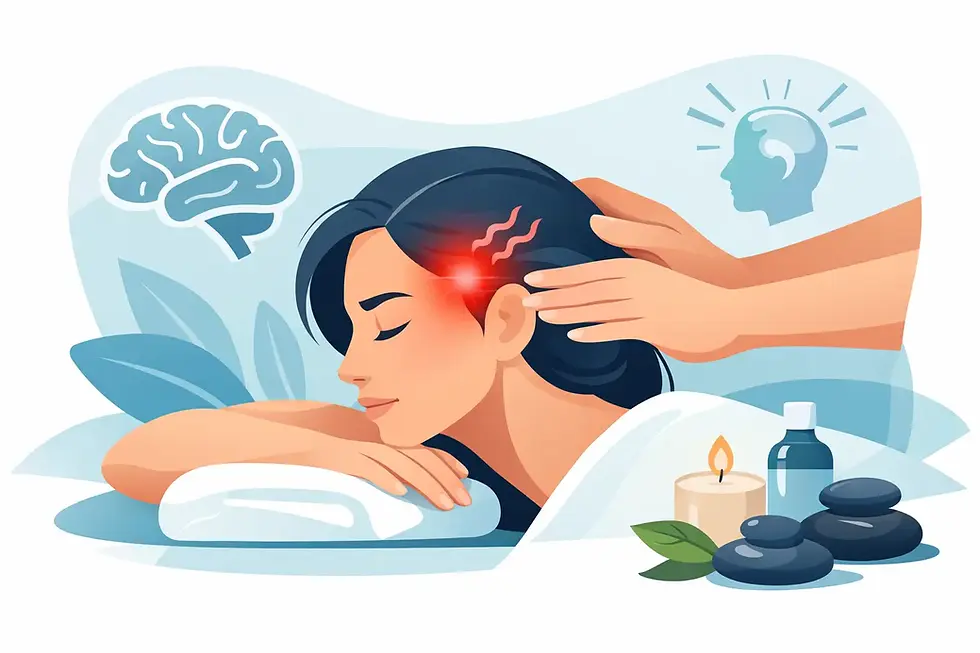
Massage for Neck Stiffness That Actually Helps
- Andreas kuck

- Jun 3
- 6 min read
You notice it when backing out of a parking space, turning toward a screen, or trying to settle into sleep - your neck feels tight, guarded, and resistant. Massage for neck stiffness can help, but the real benefit comes from matching the treatment to the cause of the tension instead of simply pressing harder and hoping for relief.
Neck stiffness is rarely just a neck problem. For many people, it builds from long hours at a desk, stress that lifts the shoulders without you realizing it, poor sleep position, strength training fatigue, or repetitive daily movement. Sometimes the neck is doing extra work because the upper back, shoulders, jaw, or even breathing pattern are not supporting it well.
That is why a thoughtful massage session tends to work better than a generic one. The goal is not only to soothe the area. It is to reduce protective tension, improve circulation, restore easier movement, and help the surrounding muscles stop overcompensating.
Why massage for neck stiffness works
When the neck feels stiff, the tissues around it are often irritated, shortened, or overactive. Massage helps by softening muscle tension, improving blood flow, and calming the nervous system. This matters because stiffness is not always about muscle knots alone. In many cases, the body is holding tension as a response to stress, fatigue, or repetitive strain.
A skilled treatment can address the muscles that commonly contribute to that pulling, heavy feeling in the neck - the upper trapezius, levator scapulae, scalenes, and the muscles around the base of the skull. Releasing these areas may reduce the sense of compression and make turning or tilting the head feel easier.
There is also a mental side to it. People who carry stress in their neck and shoulders often feel relief not only in movement, but in mood and concentration. When the body stops bracing, breathing usually becomes easier, and that can shift the whole system toward recovery.
Not all neck stiffness feels the same
This is where treatment needs some nuance. A stiff neck after a poor night of sleep may respond well to a calming, moderate-pressure massage with work around the shoulders and upper back. A neck that feels locked after intense training may need more focused therapeutic work, but with careful pacing.
On the other hand, a neck that is acutely painful, inflamed, or sensitive to touch may not benefit from deep pressure right away. In those cases, gentler techniques and work on nearby areas often produce better results than forcing the tissue. More pressure is not always more effective. Sometimes it simply makes the body tighten further.
Jaw clenching, headaches, desk posture, and emotional stress can all shape the pattern of stiffness. That is why an individualized approach matters. At A.K. Yoga & Massage, sessions are adjusted to the person, not just the body part, which is especially important for recurring neck tension.
What a good session should include
Massage for neck stiffness should begin with a brief understanding of what is driving the issue. When did it start? Is the discomfort dull, sharp, or pulling? Does it spread into the shoulders or between the shoulder blades? Is movement restricted in one direction more than another?
Those details help guide the treatment. In many cases, the neck should not be worked on in isolation. The upper back, chest, shoulders, scalp, and even the arms can influence how much strain the neck is carrying. If the chest is tight and the shoulders are rounded forward, the neck often stays under load no matter how much direct neck massage is done.
A balanced session may include slower warming strokes, targeted work on tense muscle bands, gentle mobilization, and attention to breathing. High-quality oils can also improve comfort, especially when the skin and tissues need a more soothing approach. The best treatment feels specific, steady, and safe rather than aggressive.
Pressure should match the body, not the trend
Deep tissue massage can be effective for some cases of chronic neck stiffness, especially when the tissue feels dense and overworked. But there is a difference between therapeutic depth and unnecessary force. The neck is a sensitive area with important nerves, blood vessels, and smaller stabilizing muscles. Skilled work here is measured.
For stress-related tightness or tension headaches, many clients do better with moderate pressure and slower techniques. For athletic fatigue or postural overuse, deeper work may help if the surrounding areas are included. The right pressure is the one that allows the body to release without bracing.
The shoulders and upper back matter
One of the most common mistakes in neck treatment is focusing too narrowly on the sore spot. If the shoulders are elevated, the upper traps are overloaded, or the upper back is rigid, neck stiffness tends to return quickly. Releasing these supporting regions often creates more lasting change than intense local work alone.
This is also why posture conversations should stay practical. Very few people need perfect posture. Most need more variation, better support, and less sustained tension. Massage can help reset the pattern, but the body also benefits from simple movement between sessions.
When massage helps most
Massage is often a strong option for neck stiffness caused by desk work, travel, stress, exercise recovery, mild postural strain, and general muscular tension. It can also help when the neck feels tired, heavy, or difficult to move after long periods of inactivity.
People who respond best usually describe their neck as tight, achy, stiff, or restricted rather than sharply injured. They may also notice related symptoms such as shoulder tension, tension headaches, jaw tightness, or a sense of pressure at the base of the skull.
For recurring stiffness, regular sessions can be more effective than waiting until the neck becomes severely uncomfortable. A shorter, well-timed treatment may prevent the pattern from building into something harder to shift.
When to be cautious
Massage is not the right solution for every type of neck pain. If stiffness comes with numbness, tingling, shooting pain into the arm, severe headache, dizziness, fever, recent trauma, or sudden loss of strength, medical evaluation is the safer first step.
The same applies if the pain is intense, unfamiliar, or not improving. Therapeutic massage can support recovery, but it should not replace assessment when symptoms suggest something more serious than muscular tension.
This does not make massage less valuable. It simply means good care starts with knowing what kind of care is appropriate.
How to get better results after your session
What you do after massage matters. Most people benefit from drinking water, avoiding heavy strain for the rest of the day, and gently moving the neck within a comfortable range. A short walk, relaxed breathing, and reducing screen time for a few hours can also help the effects last longer.
If your stiffness is linked to daily habits, one massage may bring relief, but it may not be the full answer. That is where pairing bodywork with simple guided movement can make a difference. Breath work, gentle mobility, and one-to-one yoga support can help reinforce the release from the table so the neck is not pulled back into the same pattern immediately.
The best plan is usually realistic, not extreme. A few minutes of consistent movement, better workstation awareness, and treatment at the right intervals often outperform occasional intense efforts.
Choosing the right massage for neck stiffness
If your main goal is to relax and reduce general tension, a calming therapeutic or Swedish-style session may be enough. If your neck stiffness is tied to training, repetitive strain, or denser muscle tension, sports or deep tissue work may be more useful. If headaches, jaw tension, or stress are part of the picture, including face, scalp, and shoulder work can be especially effective.
What matters most is personalization. Session length, pressure, positioning, and treatment focus should reflect your body, your stress level, and how long the issue has been present. Adjustable equipment and a clear treatment plan make a real difference in both comfort and results.
Neck stiffness has a way of shrinking your day without seeming dramatic enough to address. But when turning your head feels easier, your shoulders drop, and your breathing settles, the change is not small at all. Sometimes the most useful care is simply a session that listens to what your body has been compensating for and helps it stop.