How to Fix Stiff Neck and Ease Pain Fast

A stiff neck often shows up at the worst possible moment - after sleep, during a workday, or right when you turn your head to check traffic on your bike. If you are wondering how to fix stiff neck discomfort without making it worse, the first step is simple: do not force it. Most neck stiffness improves with the right mix of gentle movement, warmth, rest from aggravating positions, and hands-on care when the muscles are truly locked up.
Why a stiff neck happens in the first place
In most cases, a stiff neck is not coming from one dramatic injury. It is usually the result of muscle tension, joint irritation, or both. Long hours at a laptop, poor sleep position, stress-related clenching, intense training, and too much phone use can all leave the neck and shoulders overworked.
The neck is also closely connected to the upper back, jaw, and shoulders. That means the area may feel stiff even when the original strain started somewhere nearby. For example, rounded shoulders can overload the upper trapezius, while shallow breathing and stress can keep the front of the neck tense all day.
Sometimes the cause is straightforward. You slept in an awkward position, carried a heavy bag on one side, or spent a day looking down. Other times it builds slowly over weeks. That is why a quick fix is not always enough. Relief often comes faster when you treat both the current tension and the habit that triggered it.
How to fix stiff neck safely at home
The goal in the first day or two is to calm the tissue down while keeping the neck from getting even tighter. Complete stillness usually backfires. Aggressive stretching can also make the muscles guard more.
Start with gentle movement
Move your neck within a comfortable range, several times through the day. Turn your head right and left slowly. Tilt one ear toward one shoulder, then the other. Nod gently up and down. These motions should feel easy, not forced.
A helpful rule is this: mild discomfort is acceptable, sharp pain is not. If one direction feels blocked, stay just short of the painful edge and breathe there for a few seconds. That often works better than trying to push through resistance.
Use heat when the area feels tight
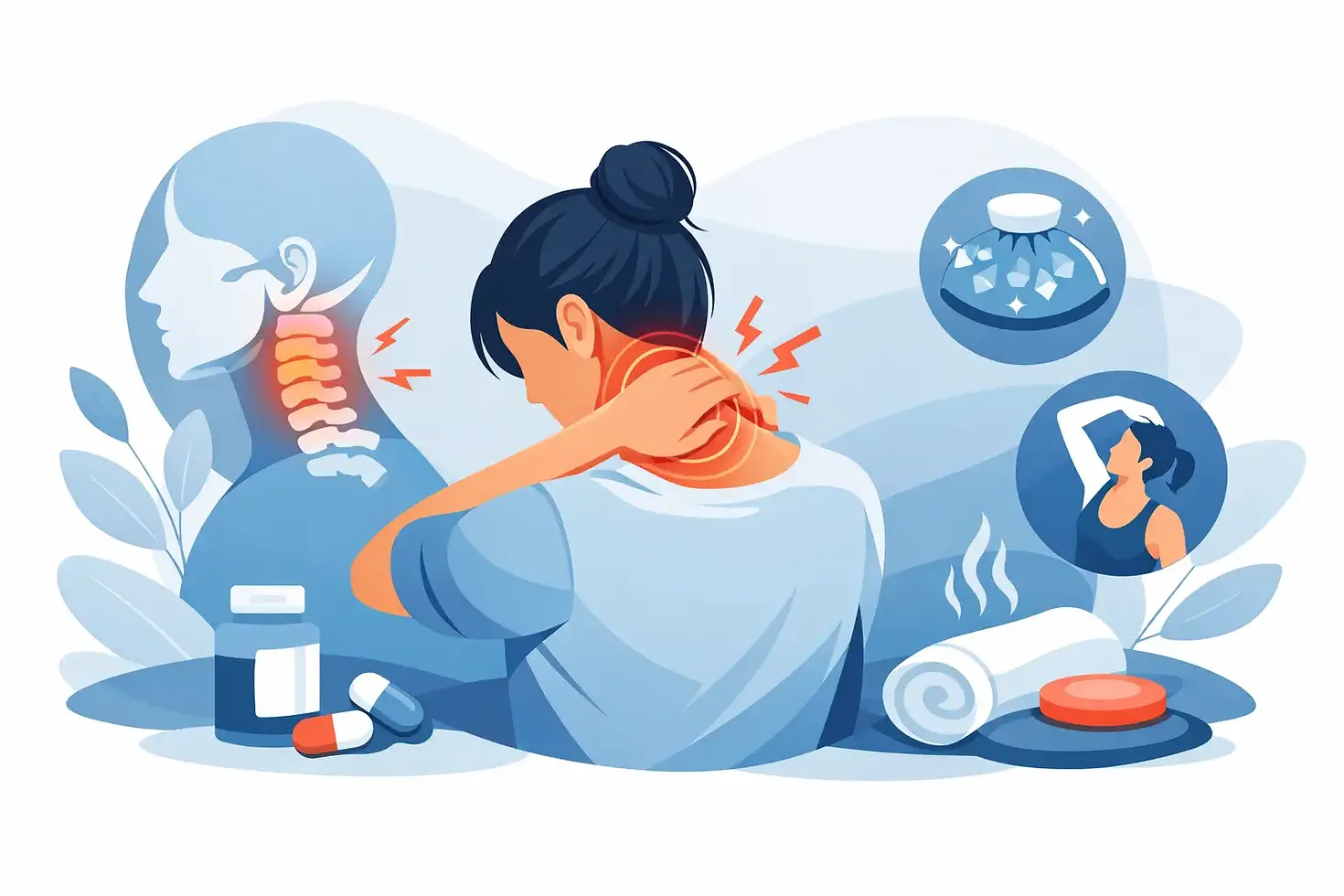
For muscular stiffness, warmth is often more soothing than stretching right away. A warm shower, heating pad, or warm compress for 15 to 20 minutes can help the tissue relax. Heat tends to work especially well when the neck feels achy, guarded, and worse after inactivity.
If the neck is inflamed after a sudden strain, some people prefer cold for the first 24 hours. It depends on the pattern. Heat usually helps stiffness. Cold may help if the area feels sharp, hot, or newly irritated.
Adjust your position, not just your pain
If your neck tightens because of how you sit or sleep, treatment will only go so far unless that position changes. Bring your screen to eye level. Let your shoulders rest instead of lifting toward your ears. Avoid cradling your phone between your shoulder and jaw.
At night, use a pillow height that keeps your head in line with your spine. Too high or too flat can leave the neck twisted for hours. If you sleep on your stomach, that alone may be part of the problem because the neck stays rotated for a long time.
What to avoid when your neck is stiff
Many people make a stiff neck worse by treating it too aggressively. Quick cracking, deep stretching, and intense workouts for the upper body can all increase irritation if the area is already reactive.
Try not to test the pain every few minutes by turning all the way into the restricted side. Avoid long periods of complete rest as well. When the neck stops moving entirely, the muscles often become more protective.
Massage guns and hard pressure can be useful in some cases, but not every case. If the tissue is acutely painful, tender to touch, or sending pain upward into the head, lighter work is usually the better choice.
When massage can help
A stiff neck often responds well to skilled massage, especially when the tension involves the shoulders, upper back, and base of the skull. The reason is simple: the painful spot is rarely working alone. Releasing the surrounding muscles can reduce the pulling force on the neck and make movement feel easier.
This is where individualized work matters. Some people need focused pressure in the upper trapezius and levator scapulae. Others respond better to slower, calming work around the neck, jaw, and scalp because stress is a major driver. If the body is already guarding, more pressure is not always more effective.
Therapeutic massage can also help you notice the pattern behind the stiffness. Maybe one shoulder is constantly elevated, your breathing is shallow, or the tension begins after long desk sessions. At A.K. Yoga & Massage, this kind of treatment works best when it is tailored to the person, not applied as a standard routine.
Gentle stretching that usually helps
Upper trapezius stretch
Sit tall and let one arm hang heavy. Tilt your opposite ear toward your shoulder until you feel a light stretch along the side of the neck. Hold for 15 to 20 seconds and breathe slowly. Repeat on the other side.
Chin tuck
Draw your chin straight back as if making a small double chin. Do not look down. This helps support the deep neck muscles and often relieves the forward-head posture that contributes to stiffness. Hold for a few seconds and repeat several times.
Shoulder rolls and chest opening
Roll your shoulders up, back, and down in a slow circle. Then place your hands behind your lower back or on a doorway and gently open across the chest. If your upper back and chest are tight, your neck may be compensating.
These stretches should create space, not strain. If you feel tingling, sharp pain, or symptoms moving down the arm, stop and get assessed.
Breathing and stress matter more than most people think
A neck can be mechanically stiff, but it can also be stress-stiff. When you are under pressure, the shoulders rise, the jaw tightens, and the breath gets shallow. That pattern keeps the neck muscles switched on for hours.
One of the fastest ways to reduce this kind of tension is to lengthen your exhale. Breathe in through the nose for four counts, then exhale for six or eight counts. Keep the shoulders soft. A few minutes of this can reduce the sense of bracing in the neck and upper chest.
This is also why gentle yoga, mobility work, and one-to-one movement guidance can be useful. The neck often improves when the whole posture and breathing pattern improve with it.
When a stiff neck needs medical attention
Most stiff necks settle within a few days to a week with sensible care. Still, some situations should not be handled as routine tension.
Seek medical care promptly if your stiff neck comes with fever, severe headache, confusion, numbness, weakness, pain after a fall or accident, or symptoms traveling down the arm that do not ease. The same applies if the pain is intense and sudden, or if you cannot find any position that reduces it.
You should also get checked if the stiffness keeps returning, lasts more than a couple of weeks, or starts affecting sleep, driving, or work. Sometimes what feels like simple muscle tension is being maintained by a disc issue, joint irritation, or a broader postural problem.
How to keep it from coming back
Neck stiffness tends to return when the daily setup stays the same. Small changes done consistently usually matter more than one intense treatment.
Take movement breaks during screen-heavy days. Change positions often. Support your upper back and shoulders with strength and mobility work. If stress is part of the picture, build in something that reliably downshifts your system, whether that is massage, breathwork, walking, or private yoga.
The most effective approach is usually not dramatic. It is steady, responsive, and personal. A stiff neck is your body asking for less strain and better support. When you respond early and gently, relief usually comes faster.