Massage for Post Workout Soreness Works

Updated: Aug 10
That heavy, stiff feeling the day after a workout is familiar to almost everyone who exercises consistently. Massage for post-workout soreness can be a practical way to reduce muscle tension, improve comfort, and help your body settle after training. Especially when recovery starts to feel as important as the workout itself.
For many active adults, soreness is not the real problem. The issue lies in how it affects the rest of the week. It changes how you sit, sleep, walk up stairs, and show up for the next session. When your legs feel dense after squats or your shoulders stay tight after upper body work, recovery needs more than patience. It needs the right kind of support.
The Benefits of Massage for Post-Workout Soreness
Post-workout soreness usually shows up 12 to 48 hours after exercise. This is particularly true when you have increased intensity, returned after a break, or introduced a new movement pattern. This delayed soreness can be completely normal, but normal does not mean comfortable.
Massage can help by calming areas of protective tightness, improving local circulation, and giving the nervous system a chance to downshift. In simple terms, your muscles often feel less guarded after thoughtful bodywork. That can make everyday movement easier and can reduce the sense that your body is bracing against itself.
The Mental Side of Recovery
There is also a mental side to recovery that people often overlook. When soreness combines with work stress, poor sleep, or general tension, the body can stay in a low-grade state of strain. A therapeutic massage session can support both physical recovery and a more relaxed state overall. This matters if you are trying to feel restored rather than just functional.
Not All Soreness Should Be Treated the Same Way
This is where a personalized approach matters. Mild to moderate muscle soreness after a solid training session is one thing. Sharp pain, joint discomfort, swelling, or pain that changes how you bear weight is something else entirely.
Massage is usually most helpful when the issue is muscular fatigue, stiffness, heaviness, or tension. If there is acute injury, significant inflammation, or pain that feels unstable, more pressure is not always better. In those cases, a gentler approach or a pause in treatment may be more appropriate.
A good practitioner does not treat every sore body the same way. They pay attention to what kind of workout you did, where the soreness sits, how long it has lasted, and whether you want deep recovery work or simply enough relief to move comfortably again.
When to Get Massage After Exercise
Timing depends on the kind of training you did and how your body usually responds. If you have just finished an especially intense session, very deep pressure right away may feel like too much. Some people do better with lighter, circulation-focused work on the same day, followed by more targeted treatment a day or two later once the initial tenderness settles. Others benefit most from a massage at the point when soreness peaks, which is often the next day.
There is no single rule that fits everyone. If your body tends to feel inflamed, sensitive, or easily overloaded, earlier gentle work can be more useful than aggressive deep tissue. If you mainly feel dense, restricted, and stuck after training, a more focused session after 24 hours may be the better match.
Which Type of Massage is Best for Post-Workout Recovery?
The best massage for post-workout soreness is the one that matches your body on that day, not the one with the most intense description. Sports massage can be a strong choice when your muscles feel overworked and specific movement patterns need attention. It is often more focused and functional, especially for the legs, hips, back, and shoulders.
Swedish massage can be ideal when soreness comes with general fatigue, stress, and nervous system overload. It supports circulation and relaxation without asking the body to tolerate too much intensity.
Deep tissue massage can help when certain areas stay chronically tight after training. However, deeper is not automatically better for fresh soreness. If muscles are already tender, excessive pressure can leave you feeling more depleted instead of more mobile.
In practice, many people do best with a treatment that blends techniques rather than staying rigidly inside one category. That is often what makes therapeutic bodywork more effective. The session can be adjusted based on how your calves respond, whether your lower back is compensating for tight hips, or whether your neck and shoulders are carrying strain from both exercise and desk work.
What to Expect During a Recovery-Focused Session
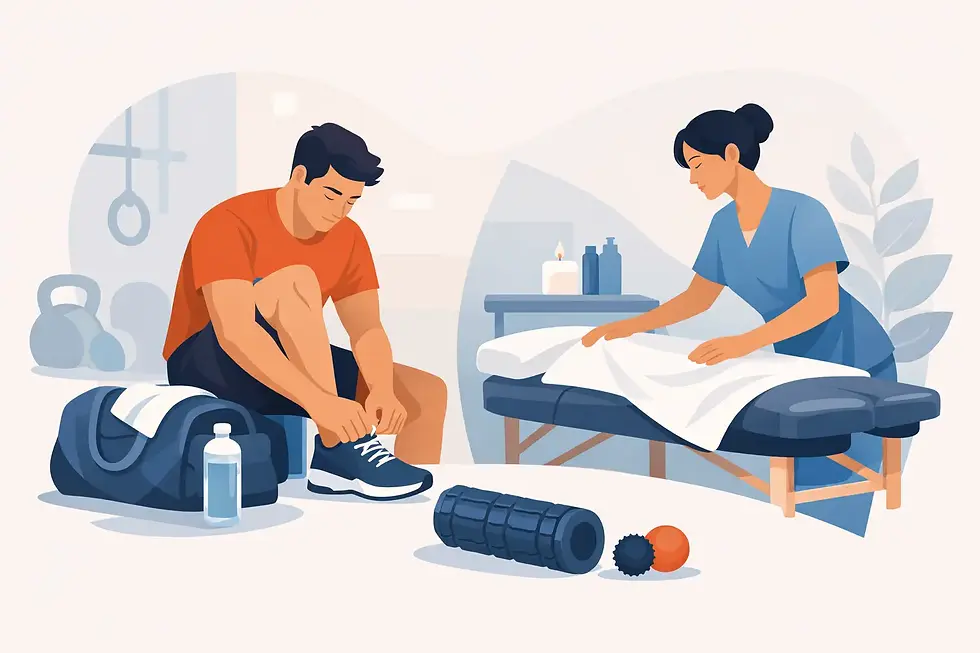
A recovery massage should feel purposeful, not punishing. You may notice broad warming techniques at the start, followed by more focused work around the areas that need attention. If your training load has created compensation patterns, the treatment may include nearby muscle groups rather than only the exact place that feels sore.
For example, tight hamstrings are not always just a hamstring issue. Sometimes the glutes, calves, or lower back are contributing. Shoulder soreness after strength training can also be tied to chest tightness, neck tension, or posture. A session that looks at the full pattern usually gives a better result than one that chases pain from spot to spot.
The products used can also shape the experience. High-quality oils and magnesium-based support can add comfort, especially when muscles feel fatigued and skin sensitivity is higher than usual. A calm environment, adjustable table setup, and enough time for the body to respond all make a difference.
Massage as Part of a Holistic Recovery Plan
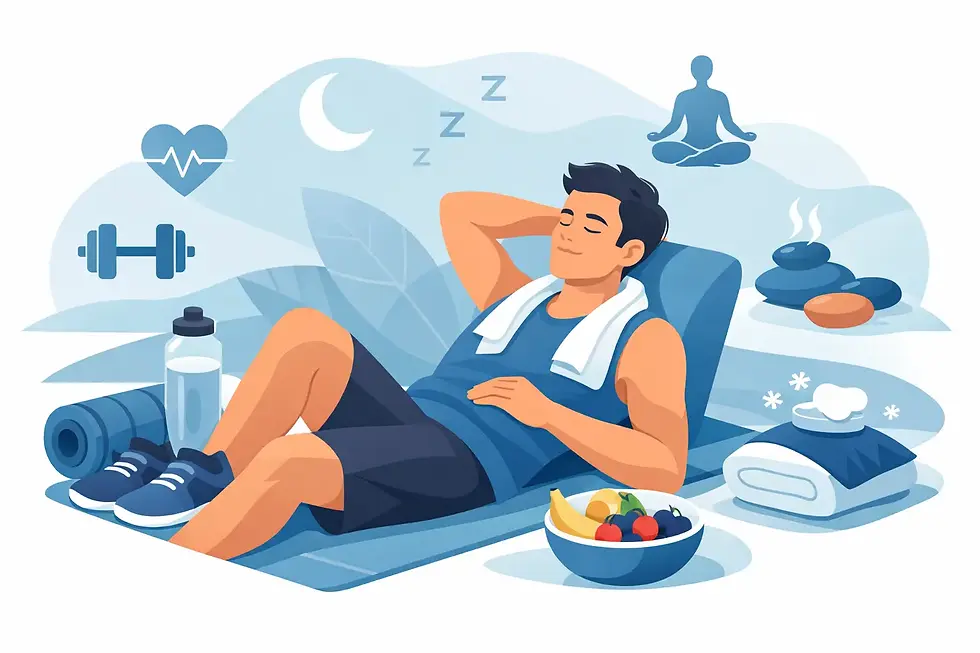
Massage can help significantly, but it works best alongside the basics. If you are sleeping poorly, skipping hydration, and training hard without enough rest, bodywork will have limits. Recovery improves when massage is paired with simple support such as gentle mobility, easy walking, steady hydration, and enough protein and rest. Breathwork can help too, especially if your body tends to stay tense after exercise. Slow breathing helps reduce the stress response and can make muscular release easier to maintain after the session.
This is one reason one-to-one wellness care can be so useful. A client may come in for sore shoulders after training, but the real pattern includes posture, work stress, shallow breathing, and lack of recovery time. When treatment considers the whole picture, results tend to feel more lasting.
How Often Should You Book Massage for Post-Workout Soreness?
It depends on your training style, work demands, and how your body holds tension. If you exercise a few times a week and mainly want support during heavy periods, an occasional massage may be enough. If you train consistently, sit for long hours, or notice that soreness lingers longer than it should, more regular sessions can make recovery feel steadier. The goal is not to wait until your body feels completely overloaded.
Some clients benefit from booking around their training cycle. Others prefer a regular rhythm that keeps muscular tension from building too far in the first place. Neither approach is wrong. What matters is choosing a schedule that supports your real life rather than an ideal one.
At A.K. Yoga & Massage, this kind of treatment works best when the session is tailored to your body, your recent activity, and the level of pressure that helps rather than overwhelms. Recovery is personal, and the treatment should feel that way too.
Signs Massage May Be a Good Fit After Your Workout
If your muscles feel tight, heavy, slow to recover, or resistant to normal stretching, massage may be worth considering. It can also be helpful if soreness keeps affecting your sleep, your next workout, or your ability to relax after training.
It may be less appropriate if the area is acutely injured, visibly swollen, bruised, or painful in a way that feels sharp and unstable. In those situations, it is better to be cautious and get the right assessment first.
A thoughtful practitioner will welcome that distinction. Good care is not about doing more. It is about doing what your body can actually use. Recovery does not have to be dramatic to be effective. Sometimes the most valuable shift is simple: your legs feel lighter, your shoulders drop, your breathing deepens, and your body no longer feels stuck in yesterday's workout. That is often enough to help you move through the rest of your week with more ease.
Conclusion: Embrace Your Recovery Journey
In conclusion, massage for post-workout soreness is not just a luxury; it is a valuable tool in your recovery toolkit. By understanding how to incorporate it effectively, you can enhance your overall well-being and performance. So, why not treat yourself to a session? Your body will thank you!
Remember, recovery is a journey, not a destination. Embrace it, and you will find yourself feeling better both physically and mentally.