Sports Massage or Deep Tissue Massage?

If your shoulders stay tight after long desk hours, or your legs feel heavy after training, the question is often not whether massage can help. It is whether sports massage or deep tissue massage is the better fit for what your body needs right now. Both can reduce tension and improve how you move, but they are not interchangeable.
Choosing well matters because the right treatment can support faster recovery, better mobility, and a more settled nervous system. The wrong approach is not necessarily harmful, but it may leave you feeling like the session missed the real issue. A personalized treatment should match your body, your stress level, and your reason for booking.
Sports massage or deep tissue - what is the difference?
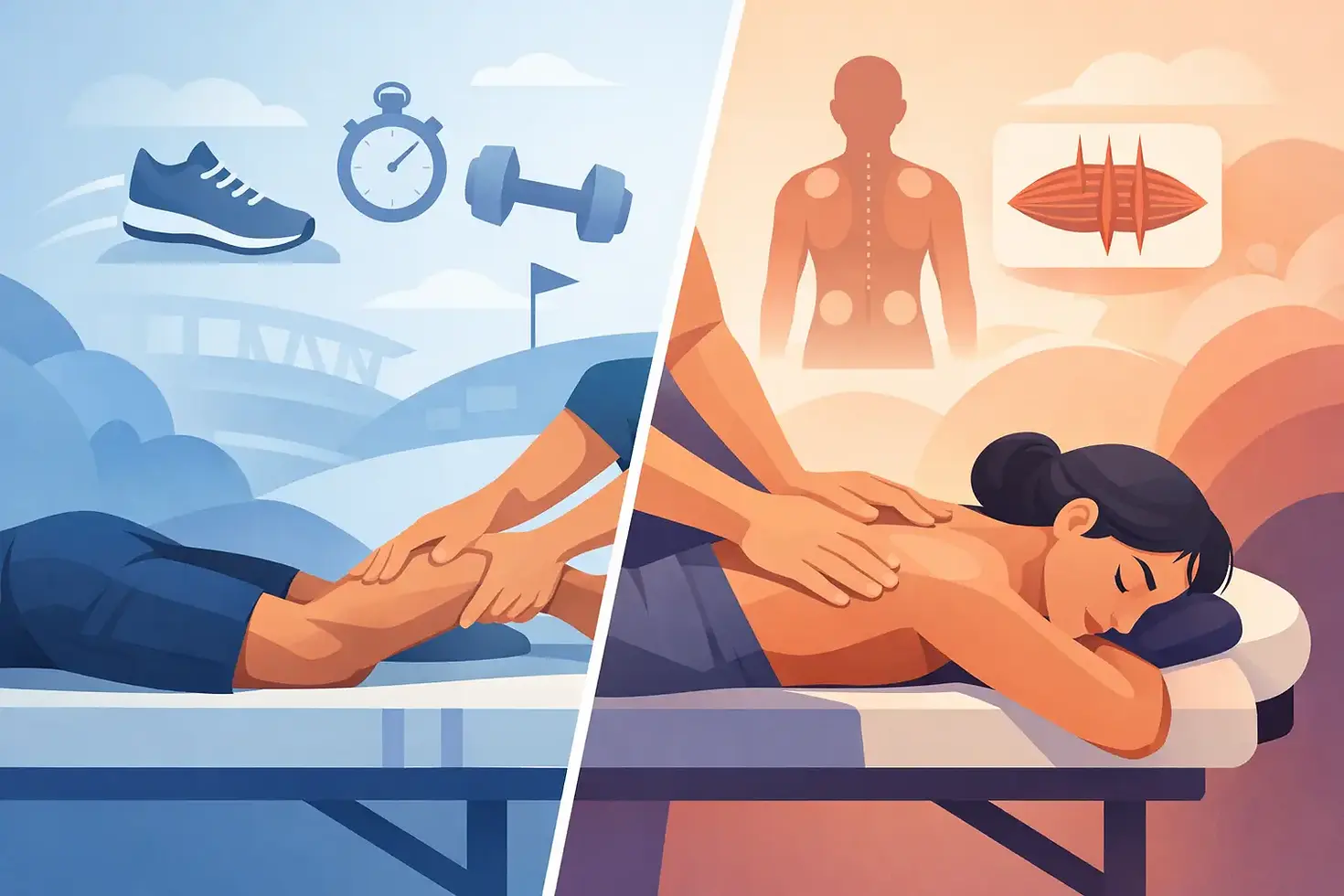
The simplest way to understand sports massage or deep tissue is to look at the intention behind the work. Sports massage is usually more movement-focused. It is often used to support training, athletic recovery, muscular performance, and areas of overuse caused by repeated activity. Deep tissue massage is usually more tension-focused. It aims to work into deeper layers of muscle and connective tissue where chronic tightness, restriction, and postural strain can build up over time.
That said, real treatment is rarely so rigid. A runner with persistent calf tightness may benefit from deep tissue techniques. An office worker with neck and shoulder pain may respond well to sports massage methods if the problem is linked to repetitive strain and limited movement patterns. Good bodywork is not about labels alone. It is about assessment, response, and adjusting the session to the person on the table.
When sports massage makes more sense
Sports massage is not only for professional athletes. It can be a strong option for anyone with an active routine, whether that means gym sessions, cycling, running, yoga, tennis, or simply a lifestyle that asks a lot from the body.
This style of massage often focuses on specific muscle groups involved in your activity. The work may feel targeted and functional rather than purely relaxing. A session can help reduce post-exercise tightness, support circulation, and address patterns that may lead to strain if ignored.
Common reasons to choose sports massage
Sports massage is often useful when you feel stiff after training, notice recurring tightness in the same area, or want support during a period of increased physical activity. It can also help if you are preparing for an event and want your body to feel more responsive without becoming overly sore from treatment.
Timing matters here. A session booked too close to intense training may need a lighter, more supportive approach. A recovery session after an event may allow for deeper work, but only if the tissue is ready for it. More pressure is not always better, especially when the body is already inflamed or fatigued.
When deep tissue massage is the better choice
Deep tissue massage is often the better fit when tension has been building for weeks, months, or longer. This is common with desk work, commuting, stress, poor sleep, jaw clenching, or posture habits that keep the same muscles switched on all day.
Many people ask for deep tissue because they want a strong massage. Strength alone is not the point. What matters is working with slow, focused pressure that helps release stubborn holding patterns without overwhelming the system. A good deep tissue session should feel effective, not punishing.
Common reasons to choose deep tissue
Deep tissue is often appropriate for chronic neck and shoulder tightness, a stiff upper back, restricted hips, low back tension, and general muscular heaviness that does not improve with stretching alone. It can also be valuable when stress is living in the body and creating a constant sense of bracing.
If your body feels both tense and tired, deep tissue may still help, but the session should be paced carefully. When someone is already exhausted, too much intensity can backfire. In those cases, combining deeper work in a few key areas with calming, restorative techniques usually gives a better result.
Pressure is not the real deciding factor
One of the biggest misunderstandings around sports massage or deep tissue is the idea that one is moderate and the other is always very strong. In practice, both can be adjusted.
Sports massage can be deep and specific. Deep tissue can be steady and controlled rather than aggressive. The better question is not, "How much pressure do you use?" It is, "What is my body trying to recover from, and what kind of input will help most?"
A skilled practitioner pays attention to tissue quality, tenderness, breathing response, and how the body changes during the session. That is what makes treatment therapeutic rather than generic.
How to choose based on your goal
If your main goal is performance support, muscular recovery, or help with repetitive activity, sports massage usually makes sense. If your main goal is relief from long-standing tension, postural tightness, or stress-related holding, deep tissue is often the better place to start.
Still, many people do not fit neatly into one category. You might exercise regularly and also carry chronic neck tension from work. You might want pain relief but also need to relax enough to sleep better. In those cases, a blended treatment is often the most useful approach.
At A.K. Yoga & Massage, this personalized approach matters. Bodies change from week to week, and a treatment should reflect that. Some sessions need focused work on shoulders and hips. Others need a broader reset that combines therapeutic pressure with a calmer rhythm and supportive products that help the muscles let go.
What a personalized session should take into account
The best massage choice depends on more than your symptoms. It also depends on your stress level, activity level, pain history, sensitivity to pressure, and how much time you have for recovery afterward.
If you are booking on a lunch break before returning to meetings, an intense treatment may not be ideal. If you are sore from training and have a race in two days, the session should support movement, not leave you feeling flattened. If your nervous system is already overloaded, calming the body may be just as important as releasing the muscle.
This is why consultation matters. A thoughtful practitioner will ask what feels tight, when it started, how you use your body, and what outcome you want from the session. That information shapes whether sports massage, deep tissue work, or a mix of both will serve you best.
What to expect after each type of massage
After sports massage, people often feel looser, lighter, and more mobile. If the session was focused and intense, mild soreness can happen, especially in overworked areas. That response is usually short-lived when the pressure and timing were appropriate.
After deep tissue massage, many clients feel both physically released and mentally quieter. There can also be temporary tenderness, particularly where tension has been chronic. Drinking water, walking gently, and giving the body a little space afterward can help.
Neither treatment should leave you feeling battered. Some sensitivity is normal. Feeling like you were hit by a truck is not a sign of quality.
If you are still unsure, start with the problem area
When people are unsure whether to book sports massage or deep tissue, it helps to start by describing the issue in plain language. Is it training soreness, repetitive strain, limited range of motion, stress tension, or a mix of several things? The answer usually points toward the right treatment.
It is also fine not to know. Many clients simply know that their back feels tight, their shoulders are creeping upward, or their legs never fully recover. A practitioner-led approach should help you sort that out without making the process complicated.
Massage works best when it is tailored, not chosen from a rigid category. Your body does not read service menus. It responds to skilled touch, clear intention, and the right level of pressure for that moment.
If you are deciding between the two, think less about the label and more about the result you want. The right session should help you move easier, breathe deeper, and feel more at home in your body afterward.