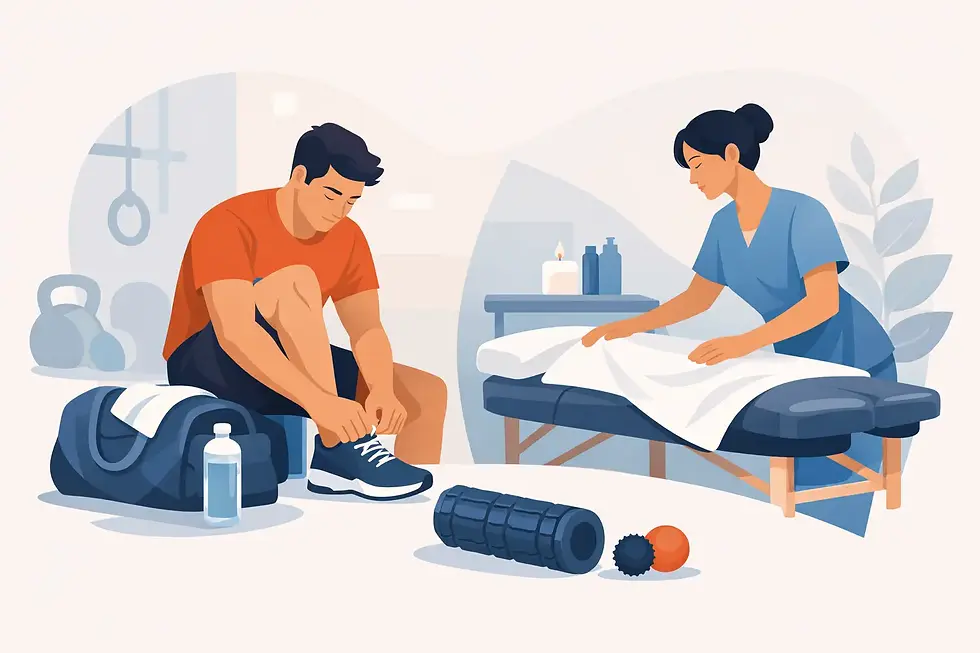
Deep Tissue Massage Benefits That Matter

Updated: Aug 10
That tight band across your shoulders, the low back that complains after a workday, the legs that stay heavy after training – these are the moments when I start asking about deep tissue massage benefits. Not because I want a luxury add-on, but because I want real relief that lasts beyond the treatment room. Deep tissue massage is often chosen when tension feels layered, persistent, or tied to daily habits, stress, posture, or physical activity.
What makes this style of massage different is not simply that it is firmer. A good deep tissue session is targeted, responsive, and shaped around what my body is actually holding. The goal is to work through more stubborn muscular tension and help restore easier movement, better recovery, and a calmer nervous system without turning the session into a test of endurance.
What Deep Tissue Massage Benefits Actually Include
The most immediate benefit many people notice is a reduction in muscular tightness. This can show up in the neck, shoulders, upper back, hips, or legs, especially in those who sit for long hours, commute by bike, train regularly, or carry stress physically. When muscle fibers and connective tissue are holding tension, they can restrict movement and create a feeling of heaviness or pulling. Deep tissue massage works into those areas with slower, more deliberate pressure.
Another common benefit is improved range of motion. If it feels harder than it should to turn your head, open your chest, bend forward, or move freely through the hips, chronic tension may be part of the problem. Massage cannot fix every mobility issue, but it can help when soft tissue restriction is a major factor. Releasing those restrictions often makes movement feel more natural and less guarded.
Pain relief is also part of the conversation, but this is where nuance matters. Deep tissue massage may help reduce discomfort related to muscular overuse, posture strain, training fatigue, and tension patterns. It is not a cure for every kind of pain, and if symptoms are sharp, radiating, or medically complex, assessment matters. Still, for many clients, thoughtful deep work can reduce the background ache that builds up from ordinary life.
Why Deep Tissue Massage Benefits Go Beyond Sore Muscles
People often book deep tissue work for physical reasons, then notice mental relief as well. That makes sense. When the body is bracing all day, the mind rarely feels fully settled. Releasing physical tension can shift breathing, reduce restlessness, and create a sense of internal space that people have been missing without realizing it.
Stress tends to collect in predictable places. The jaw tightens. The shoulders rise. The upper back hardens. The hips grip. A deep tissue session can interrupt that pattern by helping the body move out of constant holding. For some clients, this is one of the most meaningful deep tissue massage benefits – not just fewer knots, but the feeling of being more comfortable in their own body again.
Sleep may improve too, especially when pain and tension have been making it hard to settle at night. This does not happen after every session and it depends on the person, but many clients feel more grounded and physically at ease afterward. When the body is less guarded, rest often comes more easily.
Who Tends to Benefit Most
Deep tissue massage is often a good fit for working professionals with posture-related strain, active people recovering from training, and anyone dealing with recurring muscular tension. It can be especially useful for clients who know exactly where they carry stress – between the shoulder blades, around the neck, in the lower back, or through the glutes and hamstrings.
It can also support people who want bodywork with a more therapeutic focus. If a gentle relaxation massage leaves you feeling calm but does not quite address the deeper issue, deep tissue may be the better option. The pressure can be adjusted, but the intention stays clear: improve tissue quality, reduce stubborn tension, and help the body function more comfortably.
That said, more pressure is not always better. Some bodies respond well to moderate, sustained work rather than intense force. A personalized approach matters because one person’s “good pressure” is another person’s reason not to come back. Effective treatment should feel purposeful, not punishing.
Deep Tissue Massage for Recovery and Performance
For active clients, deep tissue massage can be a useful recovery tool. Exercise creates healthy stress, but repeated training without enough recovery can leave muscles feeling dense, fatigued, and less responsive. Massage may help improve how the tissues feel and move, which can make recovery periods more productive.
This is particularly relevant for runners, cyclists, gym-goers, and people returning to exercise after a break. Tight calves, overworked quads, restricted hips, and overloaded shoulders can all affect movement quality. When those areas are treated well, clients often report that their body feels lighter, more balanced, and easier to use.
Timing matters, though. Deep work right before a major event is not always ideal, especially if the body tends to feel tender afterward. For some people, a lighter sports-focused treatment is better before activity, while deeper work fits better into recovery days. This is why treatment should match your schedule, goals, and tissue sensitivity.
What a Good Session Should Feel Like
There is a common myth that deep tissue massage has to hurt to be effective. In practice, the best sessions stay within a productive range. You may feel intensity, especially in areas with long-held tension, but you should still be able to breathe and stay present. If you are clenching, pulling away, or mentally counting the seconds, the pressure may be too much.
A skilled treatment follows the body rather than forcing it. That means adjusting pressure, angle, pacing, and focus area based on what is found during the session. Some parts of the body need slow, sustained work. Others respond better to shorter, specific techniques. The overall result should be relief, not irritation.
This is one reason personalized care matters so much. At A.K. Yoga & Massage, sessions are shaped around the individual rather than applied as a fixed routine. That approach tends to create better outcomes because tension is rarely generic. It reflects your work, your stress, your exercise habits, and your body’s current state.
When Deep Tissue Massage May Not Be the Best Choice
Deep tissue massage is helpful, but it is not the answer to every problem. If you are highly stressed, exhausted, or physically sensitive, a gentler treatment may be more supportive at first. The nervous system sometimes needs calming before the muscles are ready to let go.
It may also be worth choosing another approach if you are dealing with acute inflammation, recent injury, bruising, fever, or certain medical conditions. In those cases, massage may need to be modified or postponed. Clear communication before the session helps keep treatment safe and effective.
There are also times when a combined plan works better than deep tissue alone. For example, if your shoulders keep tightening because of posture and breath patterns, massage can help, but adding mobility work, yoga, or breathing support may help the result last longer. Bodywork is powerful, but habits matter too.
How to Get Better Results from Deep Tissue Massage Benefits
The best results usually come when the session matches a real need. If your goal is shoulder relief, say so. If your low back pain tends to flare after long desk days, mention that. If you are training hard and want recovery support, that changes the approach. Specific information helps the treatment become more precise.
After the session, give your body a little room to respond. Drink water, move gently, and avoid treating the day like nothing happened. Some people feel immediate relief. Others feel looser the next morning. Mild soreness can happen, especially after focused work, but it should settle rather than build.
Consistency can also make a difference. If tension has been building for months, one session may help a lot, but it may not completely reset the pattern. Regular treatment often works better for ongoing issues than waiting until discomfort becomes hard to ignore.
Deep tissue massage works best when it is thoughtful, individualized, and connected to how you actually live. When the pressure is right and the treatment is tailored well, the benefits are not abstract. They show up in how you sit, sleep, move, train, and feel at the end of the day. If your body has been asking for more support than stretching and rest can provide, that is usually a sign worth listening to.
Conclusion: Embracing the Benefits of Deep Tissue Massage
In conclusion, deep tissue massage offers a wealth of benefits that extend beyond mere physical relief. It can transform how I feel in my body and mind. As I explore this journey, I discover new layers of relaxation and well-being. So, if you’re curious about how deep tissue massage can enhance your life, why not give it a try? You might just find the relief you’ve been searching for...
And remember, at A.K. Yoga & Massage, we’re here to support you on your path to health and wellness. Let’s embark on this journey together!